Vienne-le-Château, Marne

2026-06-17T11:09:16+01:00

“A huge mistake”

Photo: ©Matëo Granger

Memory . WW1 . Soldier


Details

Free


Location

Vienne-le-Château
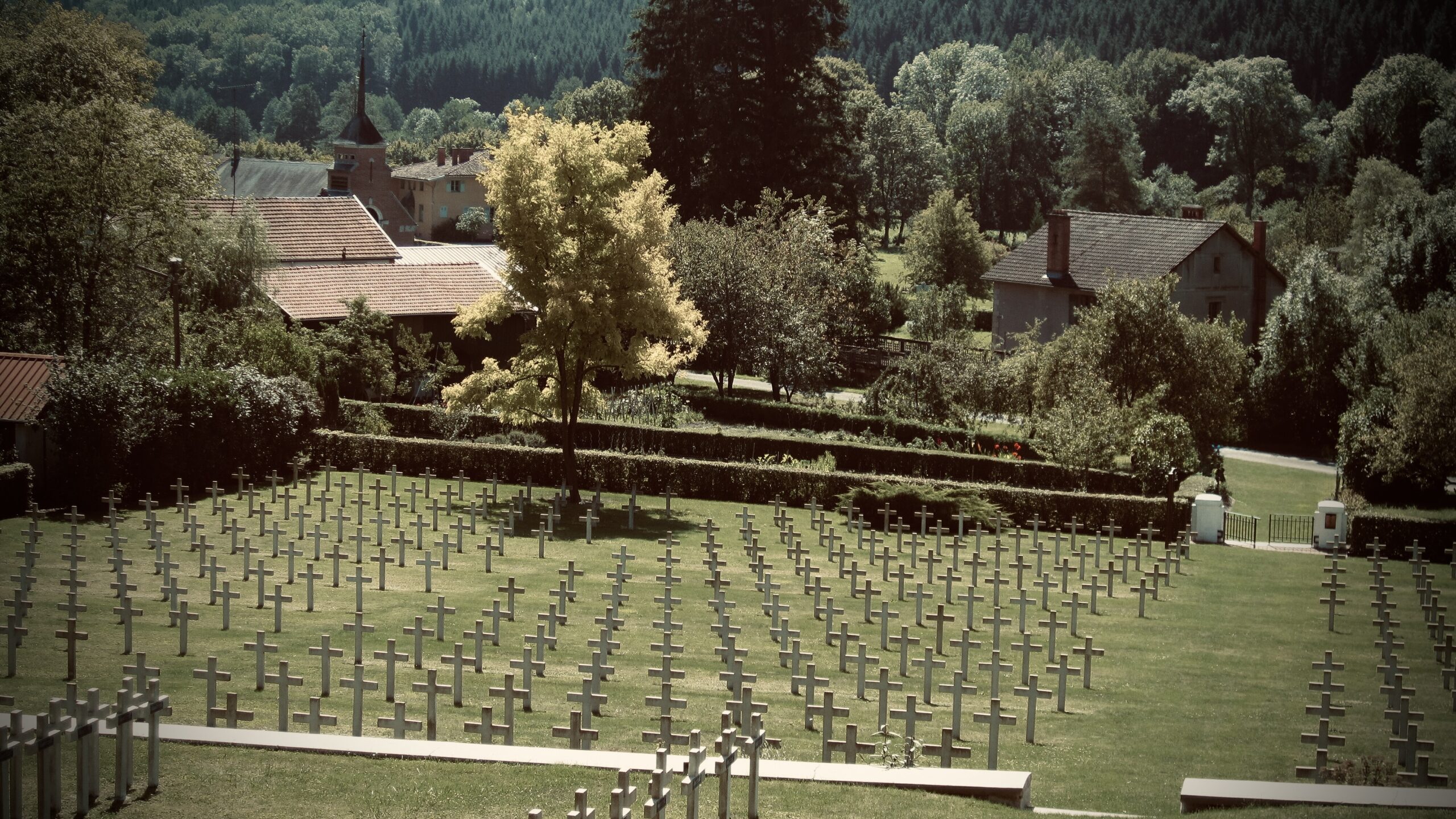
La Harazée National Cemetery

Organiser

Département de la Marne

How can I possibly come up with anything new after everything I’ve read on the subject? Letters from soldiers, diaries, war memoirs. I write fiction, and what happened here 111 years ago is far beyond my imagination.

Amélie Lucas-Gary
At the Harazée National Cemetery, among the thousands of soldiers who died in the Argonne forests between 1914 and 1918, something doesn’t add up. While delving into the archives to write this audio drama, Amélie Lucas-Gary uncovered an anomaly in the records that had seemingly gone unnoticed until then.
 
“A Major Mistake” is a geolocated audio drama meant to be experienced while walking along the paths that run alongside the Bois de la Gruerie and the Harazée National Cemetery. Two voices intersect there, separated by more than a century: that of a soldier who died in the Argonne in the fall of 1914, and that of a contemporary author who seeks to understand but is confronted with the impossibility of telling the story.
 

The main soundwalk takes place within the grounds of the Harazée National Cemetery; additional episodes are also available in the town of Vienne-le-Château.

 
Available to listen to on your smartphone starting July 5, 2026, by downloading the GOH app and let it guide you!

Credits

Text: Amélie Lucas-gary
Realisation: Gaëtan Gromer
Music: Gaëtan Gromer, Antoine Spindler
Voices: Fred Cacheux, Stéphanie Felix, Maxime Pacaud, Sébastien Yobe-Bowen (French version)
Warm thanks to Elisabeth Clamme and Frank Lesjean for their hospitality, their time, and the valuable information they provided.
Mixing and mastering: Antoine Spindler
Application: GOH
Production: Les Ensembles 2.2
Partner and support: Département de la Marne

Know more

Amélie Lucas-Gary

Amélie Lucas-Gary was born in 1982 in Arcachon and lives in Paris. After studying history and cinema at the Sorbonne, Amélie Lucas-Gary graduated from the École Nationale de la Photographie d’Arles in 2009. Since then, her practice has evolved to become primarily literary. She has published three novels: Grotte (2014) published by Christophe Lucquin Éditeur, Vierge (2017) and Hic (2020), published by Éditions du Seuil. The latter was written during a writing residency in New Zealand. All of Amélie Lucas-Gary’s novels address the question of creation: that of the universe in Hic, the author’s genesis in Vierge, and the premises of art history in Grotte. 

More recently, she published Féticheuses, an invitation from the Fléchettes collection of Sun/sun editions to take one of the images from the Albert Kahn Museum’s autochrome collection. She regularly works with artists on catalogs, exhibitions, and performances: for example, she published Qu’avez-vous vu and Trois crimes with artist Julien Carreyn (Vanloo). In 2025, Ma voix de dieu (My Voice of God) was published by the Belgian publisher Hématomes, a story in which she experiences a chair, a sculpture by the artist Maxence Mathieu. She has recently written texts for the photographer Marie Quéau, La compagnie du 1er Aout, and the art centers La Chapelle Saint Jacques and the Kunsthalle in Mulhouse

Gaëtan Gromer, born in 1978, is a sound composer, artist and director who lives and works in Strasbourg. He is also artistic director of Ensembles 2.2 (a creative sound studio particularly active in the public space) and a member of the executive committee and board of HACNUM (national network for hybrid arts and digital cultures).

He regularly brings his work into conversation with other disciplines, and has notably worked with Maria La Ribot, Valérie Manteau, Hélène Gaudy, Etienne Fanteguzzi, Sebastian Dicenaire, Eve Risser, Lucie Taïeb, Clara Olivares, LNLO, Samuel et Léo Henry, luvan, Zahra Poonawala, Stéphane Perger, Espèce de collectif…

Antoine Spindler is a viola player and teacher at Strasbourg’s music academy. Member of the Quatuor Ethos and of the Ensemble Plurium, he has also played in the Ensemble Linéa and the Strasbourg Philharmonic Orchestra. 

He has performed on many stages, for exemple at the Festival Musica in Strasbourg, the Tonhalle in Zurich, and the Asian-Pacific Contemporary Music Festival in Seoul, South Korea.He specializes in electroacoustic and mixed musics, for instance with the Live.Animated.Orchestra or by integrating the Jafta trio.

Associate artist with Les Ensembles 2.2, he has contributed to numerous projects: Des gens vivaient ici, Hacking Garden and to the show Pause. 
The Marne Department and the Three-Year “Strasbourg European Capital” Contract.

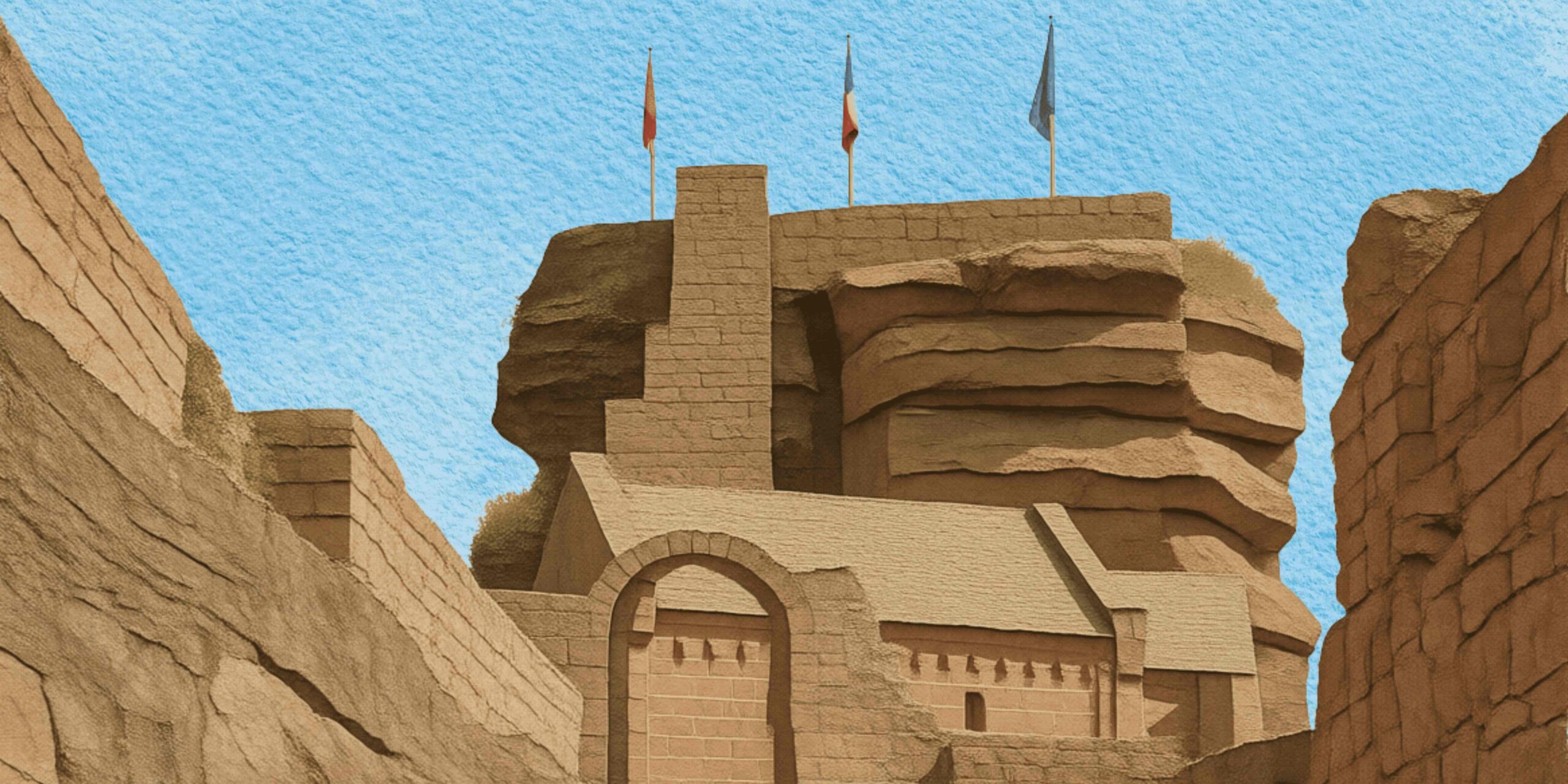
Castles of Alsace, Saverne region

2026-01-27T10:24:50+01:00

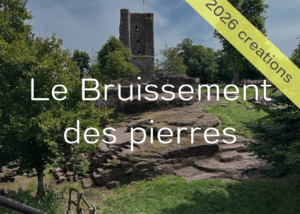
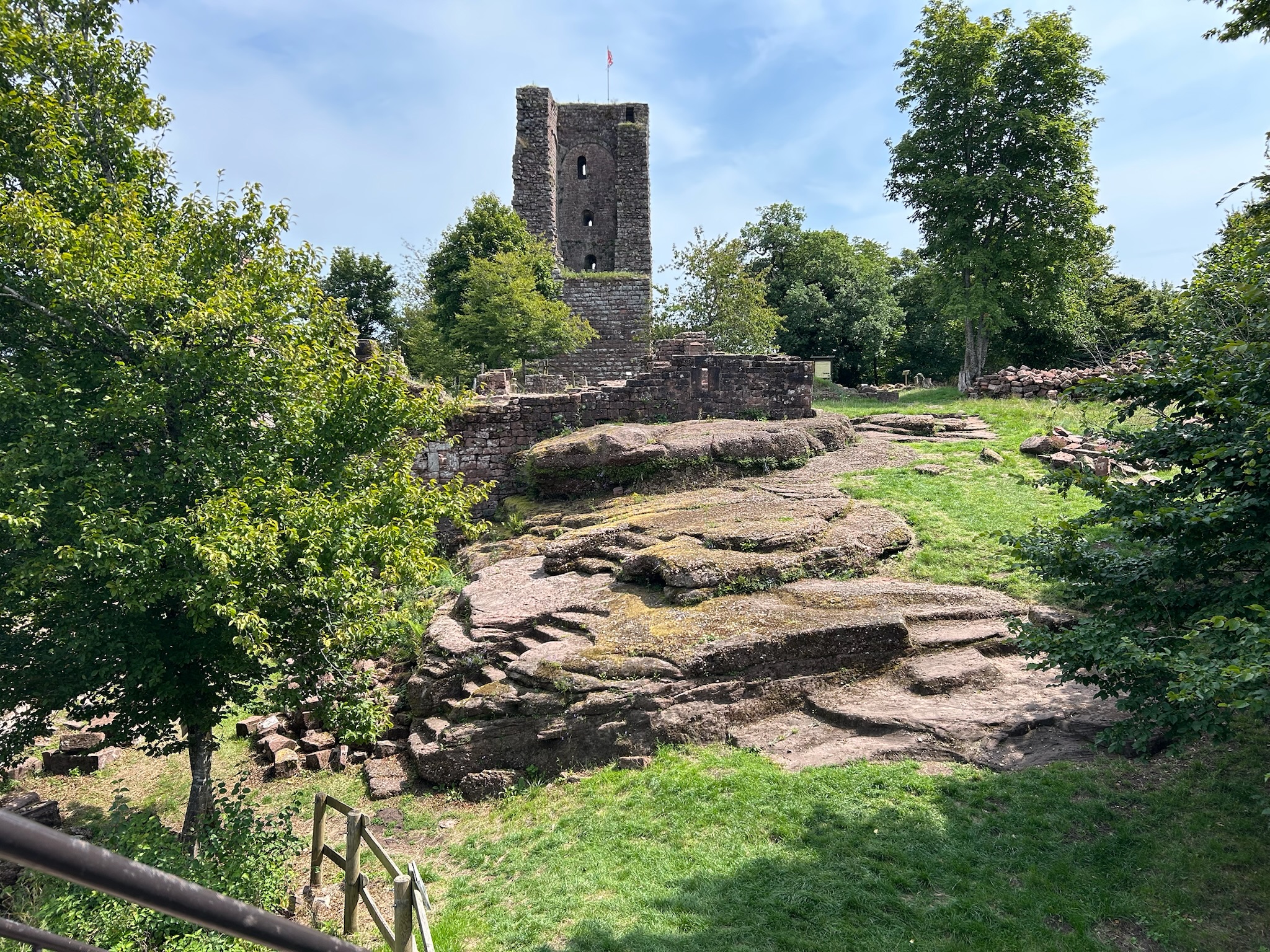
Le Bruissement des pierres

Photo: ©Gaëtan Gromer

A new collection focusing on Alsace’s fortified heritage

Details

Free

Work in progress – Soon available


Places

The ruins of Haut-Barr and Grand-Geroldseck castles


Each sound fiction in this collection invites an author to take a unique look at a fortified heritage site, engaging with its history, legends, and past and present uses.
Designed to be listened site, these creations offer a sensitive reinterpretation of the sites, where fiction becomes a means of exploring what the stones, landscapes, and silences continue to convey.

The first two episodes of the collection are currently in production and will be released in 2026.
They have been entrusted to Sebastian Dicenaire and Amélie Lucas-Gary, each working from an iconic castle in the Pays de Saverne region, with their own unique writing approach.


A sound fiction by Sebastian Dicenaire — Haut-Barr Castle

For Haut-Barr Castle, Sebastian Dicenaire takes on a particularly dense site and explores its accumulated layers, focusing on the areas left untouched by official history.

Drawing inspiration from contemporary archaeological technologies, the author imagines a form of sound archaeology capable of releasing and making audible the echoes buried within the stone.

A sound fiction by Amélie Lucas-Gary — Grand-Geroldseck Castle

For the Grand-Geroldseck Castle, Amélie Lucas-Gary imagines a sound fiction that questions the way stories are transmitted and reinvented.
Based on a contemporary visit to the site, the writing creates a dialogue between documented history and imagination, bringing together the need to understand the past and the need to tell stories.

Two sound fictions will soon be available to listen to on your smartphone. To access them, download the GOH app and follow the instructions! 


Crédits

Text: Amélie Lucas-Gary et Sebastian Dicenaire
 
Realisation: Gaëtan Gromer
 
Production: Les Ensembles 2.2
 
Partner: Alsace Destination Tourisme

Know more

Born in 1979, Sebastian Dicenaire is a sound poet and creator of radio fiction. He has published several works of contemporary poetry (Héros-Limite, Clou dans le fer, etc.) and regularly performs sound pieces on stage. His radio creations, which blend poetry and science fiction, mythology and technology, addictive storytelling and sound experimentation, have won awards at numerous festivals (New York Radio Awards, Phonurgia Nova Prize, SGDL Prize, etc.).

After studying history and cinema at the Sorbonne, Amélie Lucas-Gary graduated from the École Nationale de la Photographie d’Arles in 2009. Since then, her practice has evolved, and she has published three novels: Grotte (2014) published by Christophe Lucquin Éditeur, Vierge (2017) and Hic (2020), published by Éditions du Seuil. The latter was written during a writing residency in New Zealand. More recently, she published Féticheuses, an invitation from the Fléchettes collection of Sun/sun editions to take one of the images from the Albert Kahn Museum’s autochrome collection. She regularly works with artists on catalogs, exhibitions, and performances.

Composer, sound artist, and producer Gaëtan Gromer, born in 1978, lives and works in Strasbourg. He is also artistic director of Ensembles 2.2 (a sound creation studio particularly active in the public sphere) and a member of the executive committee and board of directors of HACNUM (national network for hybrid arts and digital cultures). He regularly engages his work in dialogue with other disciplines and has worked with Maria La Ribot, Valérie Manteau, Hélène Gaudy, Etienne Fanteguzzi, Sebastian Dicenaire, Eve Risser, Lucie Taïeb, Clara Olivares, LNLO, Samuel and Léo Henry, luvan, Zahra Poonawala, Stéphane Perger, Espèce de collectif, and others.

The DRAC Grand-Est and Région Grand Est

Go to Top