Villerupt

2025-09-17T14:50:39+01:00

Les saisons invisibles

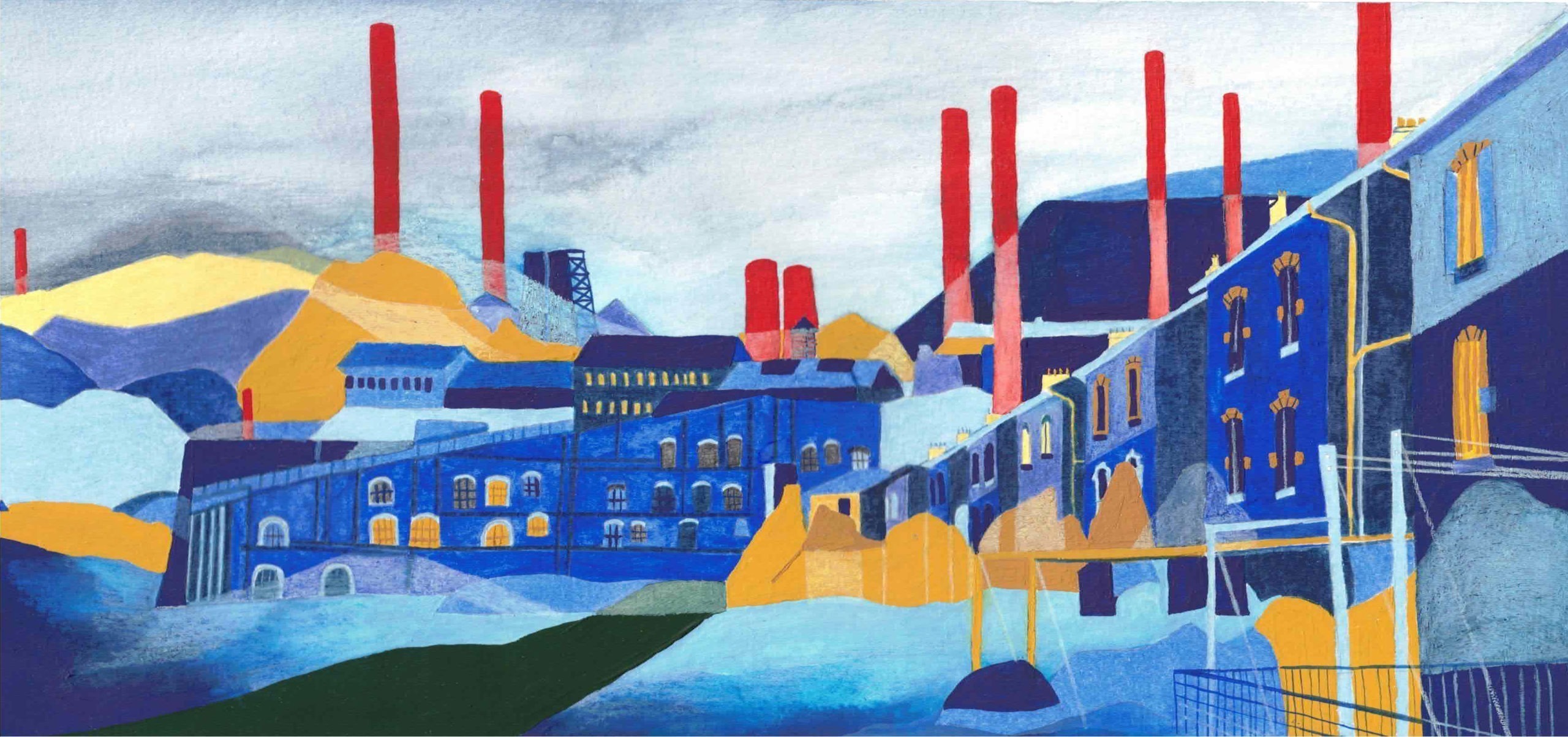
Illustration: ©Valérie Etterlen

DOCUMENTARY . WORKERS . VESTIGES
 

Details

Price : Free

12+ years old

Duration: 60/90 minutes


Organizer

Esch2022

Location

Villerupt
Meurthe-et-Moselle
France

Start :

Place Jeanne d’Arc

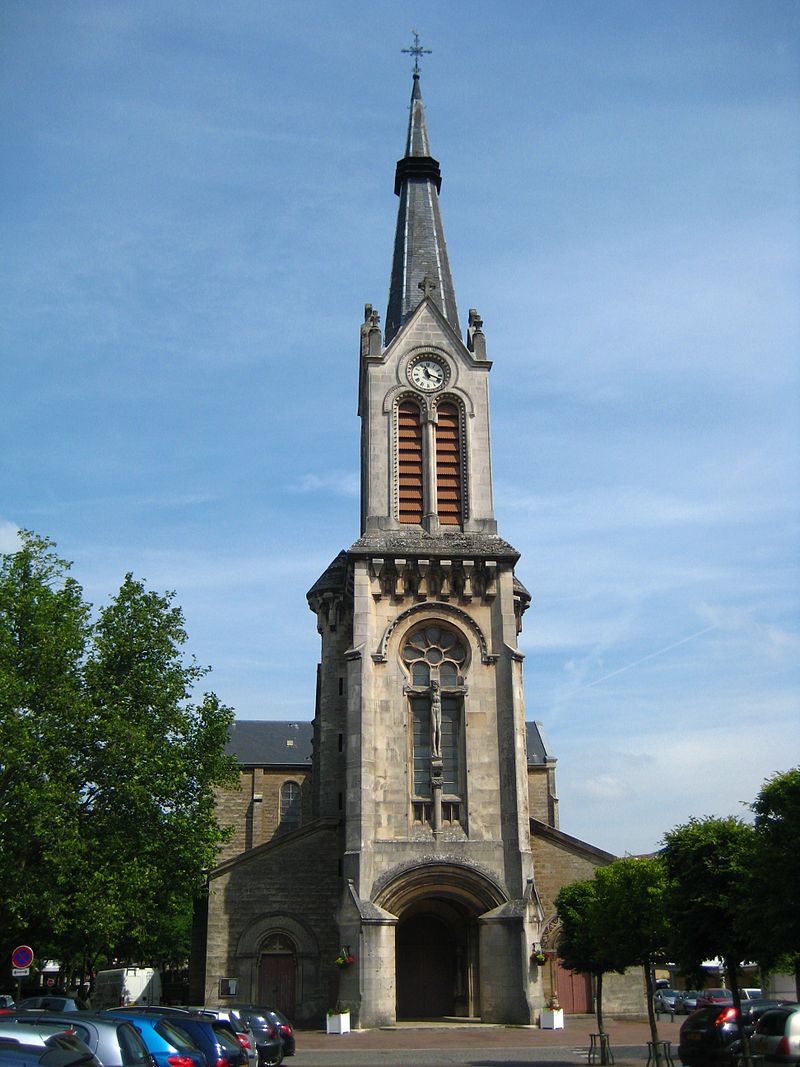
The face of cities depends on the direction they look. Villerupt now looks towards Luxembourg, towards the border. The heart around which it was built has emptied and its arteries send its flow over there, on the other side. The heart is to be rebuilt, from a common memory. And lost moments of the Saisons Invisibles (invisible seasons).

Hélène Gaudy

Hélène Gaudy is a novelist; Christina Kubisch is a composer. Inspired by the history of the town of Villerupt, on the French-Luxembourg border, and the stories of its inhabitants, they created The Invisible Seasons

This journey tells the story of the region: the landscape shaped by the mines and the emptiness that remains today. It is an image of people, of the various successive waves of immigration; but also of the territory and of the nearby borders, which define the work today. A multiplicity of stories, moments and memories obtained thanks to the testimonies of the inhabitants, who dialogue with the written text: points of view that intersect and complement each other.

The Invisible Seasons was created as part of the In the field project, for Esch2022, European Capital of Culture.

Read more

The musical composition is in keeping with the theme of boundaries: it uses different sources of sounds found on the spot, captured beyond the usual acoustic noises: the invisible waves of Villerupt, the electromagnetic fields, the contact microphones, the hidden vibrations.

Text and music come together to create a photograph of the territory and its history. Through the seasons that punctuate the sound journey, borders follow one another: those crossed in the past, the one that separated France and Germany, the one now crossed by French people working in Luxembourg. This shows their shifting, arbitrary, but also emotional character. Living in a border town is a series of possible changes of scenery, a fragility at the same time as a wealth.

Hélène Gaudy is a novelist. After studying visual arts, she led numerous projects combining writing, image and landscape. She has published art books, books for young people and several stories, including Vues sur la Mer (Les Impressions nouvelles, 2006, second selection for the Prix Médicis), Plein Hiver (Actes Sud, 2014), and Un Monde sans Rivage (Actes Sud, 2009) which was shortlisted for the Prix Goncourt. She is a member of the Inculte collective and the editorial board of the magazine La Moitié du Fourbi. 

Christina Kubisch, born in Bremen in 1948, belongs to the first generation of sound artists. Although she is best known for her sound installations and electroacoustic compositions, her practice also extends to video and visual arts. Since 2003, she has been making the ‘Electrical Walks’ series around the world, sound walks in urban spaces, where electromagnetic fields are amplified. Christina Kubisch has taught audiovisual arts in Berlin, Paris, Saarbrücken and Oxford. She has received numerous awards, including the Giga-Hertz 2021 Lifetime Achievement Award. She currently lives and works in Berlin.

With the support of Esch2022, European Capital of Culture, as well as the French Ministry of Culture, the DRAC Grand Est, the Région Grand Est, the Centre National de la Musique, the Collectivité Européenne d’Alsace, the Département Meurthe-et-Moselle, the Ville d’Esch-sur-Alzette, the Ville et Eurométropole de Strasbourg, LISER (Luxembourg Institute of Socio-Economic Research), the Musica Festival and Puzzle Thionville.

In partnership with Residhome Luxembourg and the Cottage Luxembourg.

Credits

Text: Hélène Gaudy Music: Christina KubischSound recording: Christina Kubisch, Marc NamblardIllustration: Valérie EtterlenVoices: Matëo Granger, Mathilde Melero (French version), Eli Finberg (English version)

Voice studio: Innervision

Artistic direction: Gaëtan Gromer

Production: Les Ensembles 2.2

With sound extracts by Daniel Brachetti from the short film “Des quetsches pour l’hiver”, J.-P. Menichetti, 1974

Acknowledgements : Tom Thiel, sound engineer
Port du Rhin, Strasbourg

2025-09-17T14:52:31+01:00

Port Data

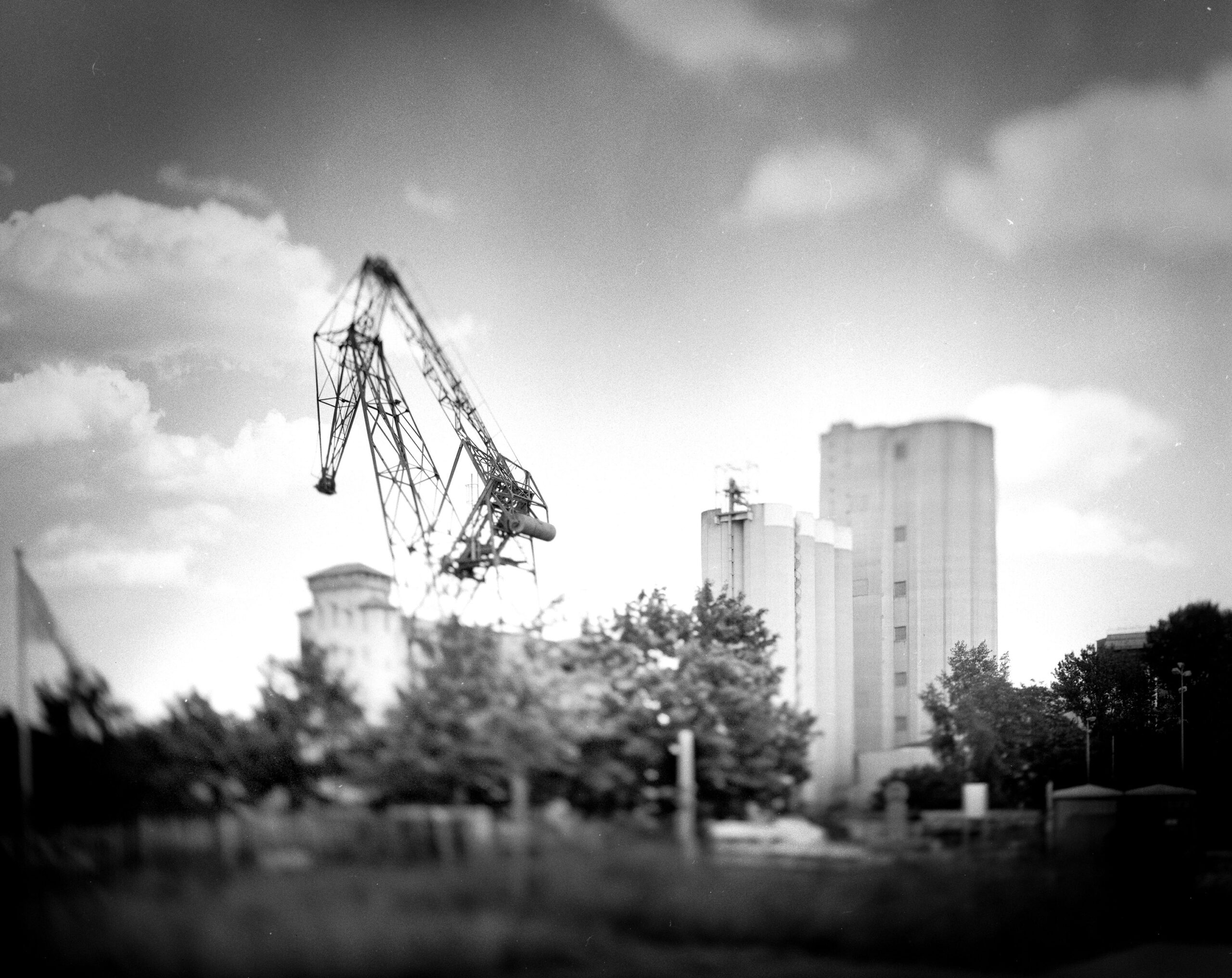
©Naohiro Ninomiya

DOCUMENTARY . MEMORIES . FIRES

Details

Price : Free

10+ years old

Duration: 60-90 min


Organizer

Esch2022


Location

Quartier Port du Rhin, Strasbourg France

Start:

Point Coop, Rue du Port du Rhin

“In the middle of the night, at the end of a wharf in the Port du Rhin industrial zone, something was burning. Throughout the country, malfunctions were reported, but no one saw the data centre and its nebulous data disappear into the flames.

On the site, you have to observe, survey and decode the signs: listen to a landscape which, little by little, begins to tell a completely different story.

Does memory smell when it burns? What do its ashes look like?”

Hélène Gaudy

A digital audio story, the work mixes fiction and musical composition, but is also enriched by the participation of the inhabitants who transmit life stories linked to the places, in order to anchor the project in the territory. Set across different places in the Port du Rhin in Strasbourg, Port Data invites you to wander around and (re)discover this area through sound.

Port Data is part of the In the field project, created for Esch2022, European Capital of Culture.

En savoir plus

Hélène Gaudy surveyed the Port du Rhin as a student at the École des Arts Décoratifs de Strasbourg in the early 2000s. Gaëtan Gromer, Clara Olivares and Antoine Spindler are from Strasbourg. Together, the novelist and the three composers drew inspiration from life in the neighborhood to create a literary and musical journey that invites you to wander. The story is geolocated and accessible via the GOH mobile app and a phone equipped with headphones…

Hélène Gaudy is a novelist. After studying visual arts, she led numerous projects combining writing, image and landscape. She has published art books, books for young people and several stories, including Vues sur la Mer (Les Impressions nouvelles, 2006, second selection for the Prix Médicis), Plein Hiver (Actes Sud, 2014), and Un Monde sans Rivage (Actes Sud, 2009) which was shortlisted for the Prix Goncourt. She is a member of the Inculte collective and the editorial board of the magazine La Moitié du Fourbi.

Gaëtan Gromer leads a creative activity at a crossroads between composition, performance and multimedia installation. He uses the astonishing power of suggestion and immersion of sound to deliver a certain view of the world, a particular point of hearing, to ‘tell’ with sound. He is one of the winners of the Imagina Atlantica 2012 European Digital Arts Prize in Angoulême and wrote the music for Samuel Henry’s Juste l’embrasser, which won the SABAM prize at the Brussels International Fantastic Film Festival in 2008.

Clara Olivares is a composer from Strasbourg. At the age of twenty-three, she wrote her first opera, Mary, for ensemble, puppets and live electronics, premiered in 2017 by Ensemble XXI.n. In 2019, she participated in the Académie Opéra en création of the Festival d’Aix-en-Provence and won the Nicola DeLorenzo Composition Prize. In 2020, she was awarded the Beaumarchais-SACD grant for lyric writing with the librettist Chloé Lechat. She has been a laureate of the Banque Populaire Foundation since 2021. Clara Olivares is Associate Composer of the Orchestre de chambre de Paris for the 2020-2021 and 2021-2022 seasons.

Antoine Spindler is a violist and teacher at the Haute école des Arts du Rhin. A member of the Ethos Quartet and the Plurium Ensemble, he has also played with the Linéa Ensemble and the Strasbourg Philharmonic Orchestra. He has performed on several stages, including the Festival Musica in Strasbourg, the Tonhalle in Zurich and the Asian-Pacific Contemporary Music Festival in Seoul, South Korea. He specialises in electroacoustic and mixed music, notably with the Live.Animated.Orchestra or as a member of the Jafta trio.

As part of the Festival Musica and Esch2022 – European Capital of Culture

Credits:

Texts : Hélène Gaudy

Music: Gaëtan Gromer, Clara Olivares, Antoine Spindler

Sound recording: Marc Namblard

With the participation of the Adastra Quartet

Actors : Anne-France Delarchand, Mathilde Melero, Milan Morotti, Jack Reinhardt, Audrey Vinel

Production: Les Ensembles 2.2

Coproduction: Festival Musica

Go to Top